"Every system of theology or philosophy must have a starting point. Logical Positivists started with the unproved assumption that a sentence can have no meaning unless it can be tested by sensation. To speak without referring to something that can be touched, seen, smelled, and especially measured, is to speak nonsense. But they never deduce this principle. It is their non-demonstrable axiom. Worse, it is self-contradictory, for it has not been seen, smelled, or measured; therefore it is self-condemned as nonsense."In another argument against empirical science, Gordon H. Clark adduces a case where observers of an "airplane" at a distance later see it dive and catch a fish. He adduces this to "demonstrate" that people can err and therefore perception is always wrong?? That, in itself, is induction from a singular case to a general law, and thus a fallacy. But more so, the adduced example is not normative of scientific practice. The example is not an observation designed to induce a general law of nature. The scientific method relies strictly on the restriction of repeatable experiments in controlled environments. But what is damning is that his example commits the fallacy of relevance. A more apt attempt would be a man trying to visually assess the length of stick at a distance. But that too is not relevant to science. From such a singular observation of a particular stick what of science is at risk? The correct method is to measure the stick with an instrument for measuring (such as a ruler). Here is another example, one which would declare the Bible false for using empirical knowledge. Consider assessing the weight of an object by hand or with a scale. Of course the scale is the more precise instrument than the hand, and we would say the more scientific way; and to this we have (Proverbs 20:10). Clark may argue that no measurement is true, since we cannot know how to measure to infinite precision. But Clark agrees man is finite and such is impossible for man. But approximate measurements are not in the category of false knowledge. Otherwise, Proverbs 20:10 is meaningless. It would be declaring all weights of human construction an abomination.
Showing posts with label presuppositionalism. Show all posts
Showing posts with label presuppositionalism. Show all posts
Thursday, June 8, 2023
Gordon H. Clark's artificial epistemology
This entry (which has been sitting in my "incomplete files" since 2022) is more philosophy of science than science itself. It may have been better posted on my companion site. Nonetheless, here it is.
Gordon H. Clark is a Christian apologist who is also identified as a presuppositionalist. Yet Clark was no presuppositionalist in the way that Van Til was. That they both have the same "label" leads to the mistaken notion that they are the same. But there is a wide divide when the foundational presuppositions are considered. While there are good elements in Clark's philosophy it is my assessment that there are far too many bad elements too.
For instance, when it came to science, Clark,adopted an anti-empirical stance. It seems to me that Clark was a victim of the "scientific" zeitgeist of the 20th century. Many of the things he says about the philosophies of atheist scientist we can agree with. But Clark, rather than reconstructing a Christian philosophy of science, tosses the baby out with the bath water. He dismisses science as noncognitive, succumbs to and agrees with the merely operational view of science embraced by Dewey and others. This surrender is truly disappointing. His argument against atheist philosophy of science is to dismiss all of science.
Clark in the final analysis was an Idealist and a Rationalist. He was also a Dogmatic Christian and believed only the Bible (held as the axioms) provided truth either directly or by way of formal deduction therefrom. Hoover has provided a critique of Clark here with which I agree.
Clark loves to wax eloquent on the fallacy of induction,
Quotes from the Trinity Foundation provide examples of Clark's thought (Trinity Foundation link)
"The problem is simply this: Induction, arguing from the particular to the general, is always a fallacy." Gordon H. Clark
"Science is always false" Gordon H. Clark
This being a universal statement generalized from the particulars that G.H. Clark produces, is an inductive argument by G.H.Clark. But Clark declares this is a fallacy. So Clark declares himself to be false.
Clark has involved himself in a self-contradiction. Of the same sort as the "brilliant" logical positivists. But this type of self-contradiction is the hallmark of man made systems.
Logical Positivism - which scoffed at "metaphysical" inquiry (one should raise an eyebrow immediately) - tried to base its epistemology (without metaphysics!) on the premise that all truth is either empirical or logically derived (i.e., tautology). All else was metaphysical nonsense. The problem, of course, is that the foundational premise of Logical Positivism is neither a tautology nor an empirical truth. Thus, Logical Positivism is metaphysical nonsense -- self contradictory. It is metaphysical nonsense of the very sort they decried.
Clark agrees with this assessment, in his essay of Atheism he says:

Thursday, December 3, 2015
The Swindle of Emergentism
It took awhile due to other activities, but here, at last, is the inaugural post for Scripta Scientificae pro Christiana Apologeticum.
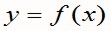
What amazes me about atheist philosophers of mind is that they are material monists and yet seem to be pretty ignorant of physics and invariably fail to present a formal mathematical description of the "goings on" in their physical brain that yields anything they can show to be consciousness or any other so-called "mental" properties of that mass of stuff between their ears. Instead, what you find is a tangle of mere qualitative verbiage. The closest I have found any come to describing their "emergentism" is that there must be "law-like connections" between supervenient mental properties and the underlying material brain. They never explain "law-like" in detail that I have found. I consider such loose language to be the equivalent of the equally silly phrase "pregnant-like." If by "law-like" they mean probabilistic relations, those are still technically laws with an irrational residue of randomness. At any rate, if there were a quantitative relation between matter and emergent "mental" properties those could still be expressed mathematically. If probabilistic, the frequencies of random outcomes would be determined by the material properties. The materialists need to present their theory or admit defeat that their scientific ideal of encompassing all of reality within a web of physical laws is flawed and that reality doesn't fit their atheist notion of the uniformity of nature. As we have said, the concomitant of their merely assumed assertion of the uniformity of nature is that the present is as the past, and that the future will be as the present. As a result, the properties/laws that assembled their brain in the past via physical evolution are the same laws that determine their brain and their thoughts (merely "mental" properties of the underlying matter) today. This is called bottom-up causation -- it is a theorem of material monism and their assumption of the uniformity of nature. So then, we don't need to dot all the "i's" to give the specific form of any emergent property that the atheist philosopher of mind might propose. As mentioned above, the philosophers of mind use a lot of qualitative verbiage. By essentially verbal ruses, atheist philosophers of mind have devised different theories of mental properties in a purely material universe. These theories are: (1) epiphenomenalism; (2) emergentism; (3) reductionism; and (4) functionalism. All of these become essentially equivalent once the atheist has bought into his assumptions of physicalism and the uniformity of nature. The products produced in the physical crucible of the big bang and its subsequent physical evolution (culminating in the purely physical man) all necessarily obey the laws of physics. To assert otherwise is to embrace a radical and irrational principle of discontinuity. Such a principle of discontinuity would contradict the so-called "rational" atheist's belief in the uniformity of nature. Such discontinuity should be anathema to the atheist who eschews any hint of the miraculous.1 To admit such would be to say the present is not as the past and that the future may not be as the present. With such an admission the atheist's "scientific program" would be rendered absurd and self-repudiated. It is to embrace metaphysical irrationalism. In all of these theories of mind, regardless of philosophical terminology, a mind represented by the symbol "y" is a function "f" of base physical properties denoted by "x." Physical matter is the only ingredients available to the rational material monist. And those ingredients by the ideal of science evolve according to differential equations of physics. So then in equation form: In essence, mental properties "y" (in the equation above) are determined by configurations of matter "x." Here "x" is taken to be exhaustive of the constituents of the universe. "x" describes the configurational state of the matter. So "y" -- as are all emergent properties -- is epiphenomenal and merely configurational -- dependent solely and totally on the "x." The mental states "y" have no causal efficacy. The "y" are shadows of the base causal elements "x." Consequentially, there is no rational autonomy present in "y."
As we have said, this representation is a necessary consequence of the uniformity of nature and matter being the ultimate and complete constituents of reality (material monism).
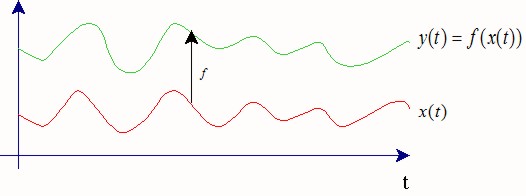
The following figure summarizes the above and illustrates the causal structure required by the consistent material monist. It shows that the time evolution of y is determined entirely by the base physical stuff "x" by way of the function "f." The base physical entities are unaffected by the "y." The upward arrow visually represents the term "bottom-up" causation.
In essence, mental properties "y" (in the equation above) are determined by configurations of matter "x." Here "x" is taken to be exhaustive of the constituents of the universe. "x" describes the configurational state of the matter. So "y" -- as are all emergent properties -- is epiphenomenal and merely configurational -- dependent solely and totally on the "x." The mental states "y" have no causal efficacy. The "y" are shadows of the base causal elements "x." Consequentially, there is no rational autonomy present in "y."
As we have said, this representation is a necessary consequence of the uniformity of nature and matter being the ultimate and complete constituents of reality (material monism).
The following figure summarizes the above and illustrates the causal structure required by the consistent material monist. It shows that the time evolution of y is determined entirely by the base physical stuff "x" by way of the function "f." The base physical entities are unaffected by the "y." The upward arrow visually represents the term "bottom-up" causation.
 By elementary application of the chain rule, the equation of motion for y(t) (mental state at time t) is:
 We note that this equation can be interpreted either quantum mechanically or classically. Regardless, the equation of motion for the matter "x" is necessarily (by the monist's assumption of closure of reality with respect to matter) expressed solely via physical principles. For example, in classical physics (with "x" representing the canonical coordinates p,q) the equation is the equation of Hamiltonian mechanics. The end result, as we have said before in less technical terms, is that all of human action and experience are the necessitated effects of matter-in-motion. There is no "mind" in the driver's seat, no top-down causality, no autonomous rationality. To the materialist, what your "mind" thinks is the result of the random vibrations of the quantum fields in your constitution and what you say are just ultimately random utterances. This is in no way a rational worldview.
1 One atheist who implicitly denies the uniformity of nature is Richard Dawkins, as discussed here. Dawkins, by maintaining human autonomy, is apparently unaware that he has implicitly thrown out the uniformity of nature. Hence, human autonomy to Dawkins is an irrational miracle.↩
What amazes me about atheist philosophers of mind is that they are material monists and yet seem to be pretty ignorant of physics and invariably fail to present a formal mathematical description of the "goings on" in their physical brain that yields anything they can show to be consciousness or any other so-called "mental" properties of that mass of stuff between their ears. Instead, what you find is a tangle of mere qualitative verbiage. The closest I have found any come to describing their "emergentism" is that there must be "law-like connections" between supervenient mental properties and the underlying material brain. They never explain "law-like" in detail that I have found. I consider such loose language to be the equivalent of the equally silly phrase "pregnant-like." If by "law-like" they mean probabilistic relations, those are still technically laws with an irrational residue of randomness. At any rate, if there were a quantitative relation between matter and emergent "mental" properties those could still be expressed mathematically. If probabilistic, the frequencies of random outcomes would be determined by the material properties. The materialists need to present their theory or admit defeat that their scientific ideal of encompassing all of reality within a web of physical laws is flawed and that reality doesn't fit their atheist notion of the uniformity of nature. As we have said, the concomitant of their merely assumed assertion of the uniformity of nature is that the present is as the past, and that the future will be as the present. As a result, the properties/laws that assembled their brain in the past via physical evolution are the same laws that determine their brain and their thoughts (merely "mental" properties of the underlying matter) today. This is called bottom-up causation -- it is a theorem of material monism and their assumption of the uniformity of nature. So then, we don't need to dot all the "i's" to give the specific form of any emergent property that the atheist philosopher of mind might propose. As mentioned above, the philosophers of mind use a lot of qualitative verbiage. By essentially verbal ruses, atheist philosophers of mind have devised different theories of mental properties in a purely material universe. These theories are: (1) epiphenomenalism; (2) emergentism; (3) reductionism; and (4) functionalism. All of these become essentially equivalent once the atheist has bought into his assumptions of physicalism and the uniformity of nature. The products produced in the physical crucible of the big bang and its subsequent physical evolution (culminating in the purely physical man) all necessarily obey the laws of physics. To assert otherwise is to embrace a radical and irrational principle of discontinuity. Such a principle of discontinuity would contradict the so-called "rational" atheist's belief in the uniformity of nature. Such discontinuity should be anathema to the atheist who eschews any hint of the miraculous.1 To admit such would be to say the present is not as the past and that the future may not be as the present. With such an admission the atheist's "scientific program" would be rendered absurd and self-repudiated. It is to embrace metaphysical irrationalism. In all of these theories of mind, regardless of philosophical terminology, a mind represented by the symbol "y" is a function "f" of base physical properties denoted by "x." Physical matter is the only ingredients available to the rational material monist. And those ingredients by the ideal of science evolve according to differential equations of physics. So then in equation form:

1 One atheist who implicitly denies the uniformity of nature is Richard Dawkins, as discussed here. Dawkins, by maintaining human autonomy, is apparently unaware that he has implicitly thrown out the uniformity of nature. Hence, human autonomy to Dawkins is an irrational miracle.↩
Subscribe to:
Posts (Atom)